Why SMEs That Adopt AI in 2026 Will Understand Customers Better
AI will evolve into a “Business Intelligence Layer” by 2026 that will help companies discover customer behaviors, needs, and hidden business opportunities hidden in massive amounts of data.
This is a big change for SMEs. In the past, big organizations have had the upper hand in the analysis of customer data simply because they had bigger teams and more back-office systems. In contrast, smaller businesses often made decisions based on experience, gut feeling or assumptions.
However, with AI becoming more affordable and accessible, SMEs are now able to benefit from the same deep data analysis capabilities as larger organisations. AI is helping small businesses tap into and utilize existing data as a great opportunity to increase sales, improve customer experience and compete better.
The Growth of AI Adoption in 2026
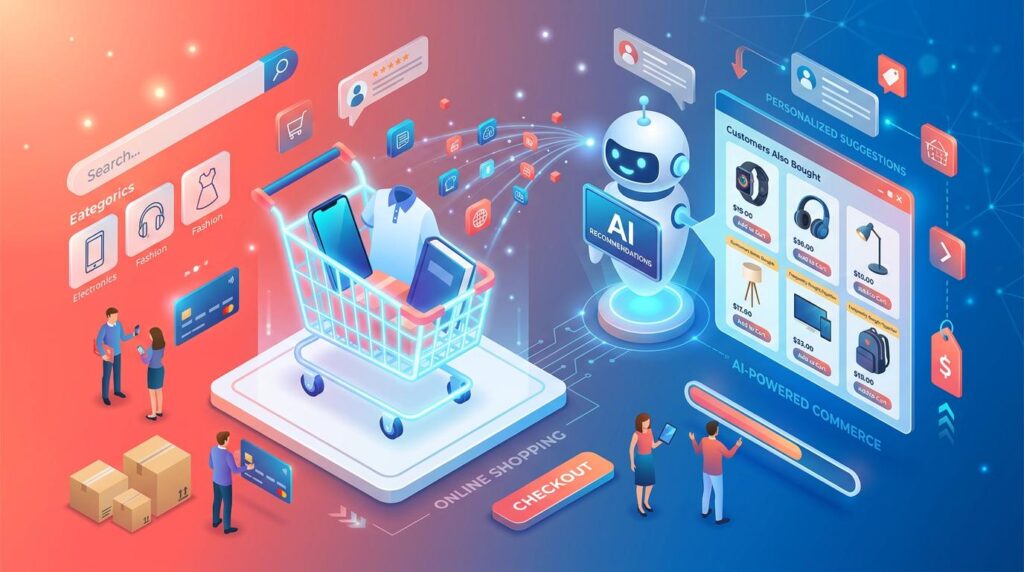
Throughout 2023-2024, numerous companies were introduced to AI with tools such as Generative AI or ChatGPT that helped generate text, images and boost productivity in the workplace. Companies began turning to AI to write emails, summarize documents, and write marketing copy. This was the first move towards AI integration in day-to-day business operations.
In 2026, the role of AI is moving to the next level. According to PwC, AI will be a critical enabler for competitive advantage, helping businesses to better understand their customers and deliver personalized experiences at scale. PwC also points out that the competition in 2026 will not only be about having AI, but about developing Agentic AI systems that can interact with business data, existing systems and teams, while delivering measurable business outcomes.
Businesses will transition from AI Experimentation to AI for measurable Business Value, such as revenue growth, cost reduction, improved customer experiences and operational efficiency.
The winning businesses won’t be the ones using the most AI, but the ones that strategically apply AI to high-impact business processes and systematically connect AI to their business data.
👉🏻 Read related article: 7 Quick Wins to help your business growth with AI
AI is no longer seen as just a tool for doing isolated jobs. It’s becoming Business AI or Enterprise AI, a system that can learn from company data, interact with business systems and help with real-time decision making.”
The most significant difference is that data has become one of the most valuable assets for companies and AI is the technology that turns massive amounts of data into useful insights.
For example, businesses’ customer data may be scattered across several systems, including website purchase history, LINE OA conversations, Facebook Messenger messages, customer reviews, CRM data, and internal documents. With conventional methods, it might take days or even weeks to assemble it and analyze it.
AI meanwhile can collect, analyze and summarize this information in minutes while answering important business questions such as: What are the customer groups most likely to make repeat purchases?
- Who are the customers who are likely to churn?
- Which products or services receive the best results or the most complaints?
- What factors influence customers’ purchase decisions?
- Which promotions generate the highest return for each customer segment?
This is why competition in 2026 will not be determined by “who has more data” because almost every business already has access to data. Instead, competition will be about “who can transform data into customer understanding faster.”
Businesses that continuously use AI for data analysis will not only understand “what customers do” but also “why customers make those decisions.” They will be able to predict future behaviors and gain a significant competitive advantage in the AI-driven business era.
How SMEs Use AI to Understand Their Customers Better
1. Analyze Customer Behavior in Real Time
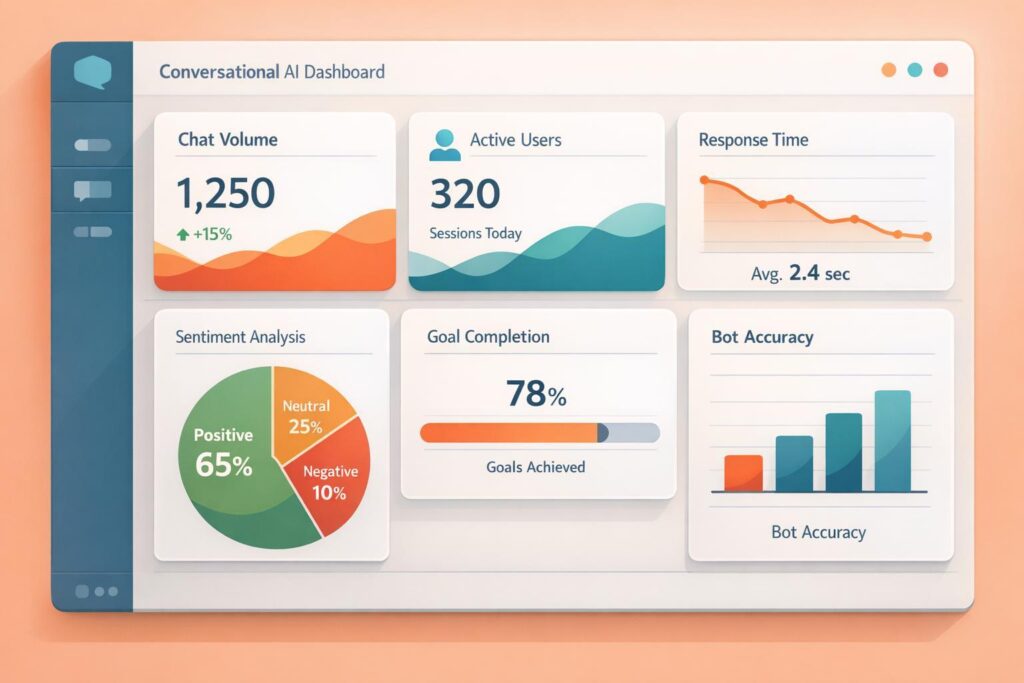
One of the main reasons businesses are investing in AI is because of its ability to analyze large data and convert it into useful insights that help in making faster and more accurate business decisions. It affects the customer experience directly and in the long run, the customer retention.
AI is able to aggregate and analyze data from purchase history, website activity, marketplace transactions, and conversations with customers. “The data was spread across different systems, which was cumbersome and slow to analyze.
Artificial intelligence can help SMEs to get the full picture of the customer journey, from the first brand touchpoints, product interest, inquiries, purchase decisions to repeat purchases. They can see the insights immediately and use them to make better decisions like tweaking marketing campaigns, managing inventory and planning sales strategies instead of waiting for monthly reports.
2. Finding Customer Pain Points from Conversations
A business may receive hundreds or even thousands of customer messages a day on LINE OA, Facebook Messenger, Instagram or Live Chat. It’s almost impossible to manually read and analyze each and every conversation.
It can also summarize customer conversations across multiple channels in minutes, identify topics that are being discussed frequently, analyze customer sentiment, and highlight issues that need immediate attention before they impact sales or brand image.
For example, AI helped to find that last week 40% of customer inquiries were about delivery times and 25% were asked about how to use a product. This can help businesses improve the information on their website, develop better FAQs, or create automated responses that are more responsive to customer needs. This makes life not only easier for Customer Service teams, but also gives SMEs the chance to learn about customers through real conversations, not assumptions or personal opinions.
3. Predict Customer Behavior and Business Opportunities
AI can also evaluate not only past data, but it can also evaluate existing data to predict future trends. This is a game changer from fixing problems after the fact to making decisions before they occur. Businesses can use AI to spot early warning signs and act before they are left holding the bag, instead of waiting for sales to fall or customers to leave.
AI is able to predict customer trends based on their purchase history, repeat purchase frequency, website behavior, responses to marketing campaigns and sales conversations.
If AI finds a particular category of products is trending, for instance, companies can stock up, build marketing campaigns, and even increase their advertising budgets in advance.
Previously this capability was reserved for large companies with dedicated data teams for SMEs. It’s 2026 and AI makes advanced customer analysis easier, helping businesses to make data-based decisions, rather than relying on experience or gut feeling.
4. Understand their customer needs
Tailored marketing used to be available only to big organizations with CRM systems and teams dedicated to the task. However, AI is making this capability accessible to SMEs.
AI is able to look at existing business data like purchase history, website activity, communication channels, and customer discussions to learn about individual consumer preferences. AI is able to suggest more relevant communication, offers and experiences for each customer’s context instead of sending the same message to every customer.
According to the Salesforce State of the Connected Customer report, 81% of customers expect businesses to provide more personalized experiences and 73% of customers expect companies to understand their unique needs. This means businesses can’t use a one-size-fits-all approach to communication, but must leverage data to build more personalized customer experiences.
5. Discover new insights in existing data
Businesses have a wealth of data that is not fully exploited like purchase history, customer conversations, product reviews, website behavior and CRM data. However often this information is stored separately by different teams creating Data Silos preventing businesses from seeing the full picture of the customer.
AI can connect data from multiple sources and find hidden patterns that are not apparent to businesses.
For example, AI might discover that customers who buy Product A are likely to buy Product B in the next 30 days, or that customers who contact the business via LINE OA convert more often than customers from other channels.
Such insights enable SMEs to better plan their marketing strategies, sales planning and customer service on the basis of real data rather than assumptions.
AI is powerful because it doesn’t just tell you “what happened”, but it tells businesses “why it happened” and “what actions should be taken next” in an effort to drive better business outcomes.
How Businesses That Adopt AI Early win a Competitive
As AI continues to learn from more data over time, businesses that adopt AI early can build a Data Advantage in a long-term advantage that is difficult for competitors to replicate. This is because AI becomes more capable of understanding customer behavior, business processes, and company-specific insights through continuously collected real-world data.
| Businesses Using AI | Businesses Not Using AI |
|---|---|
| Understand customer behavior in real time | Rely mainly on historical data |
| Analyze large amounts of data within minutes | Spend days collecting and creating reports |
| Deliver personalized marketing experiences | Use the same messages and promotions for all customers |
| Predict trends and potential problems before they happen | React to problems only after they occur |
| Make decisions based on data-driven insights | Rely mainly on experience and assumptions |
Key takeaway: Businesses that start using AI earlier can continuously accumulate valuable data and insights, allowing them to understand customers better, make faster decisions, and create stronger competitive advantages over time.
Conclusion: How to Start Using AI for SMEs
In 2026, the business competition won’t be about who uses AI, but who uses AI to understand their customers better. For SMEs, the adoption of AI is not merely about productivity gains but is also about establishing long-term competitive advantages. The more a business knows about its customers the more opportunities it has to build stronger relationships, increase sales and achieve long-term success.
Many companies think AI needs large data teams or complex systems. But there is data that SMEs already have that they can start to leverage, such as customer conversations, sales data, product data and internal documents.
The trick is to choose an AI platform that can take business data and turn it into valuable information, not just churn out content or answer generic questions.
Saifa AI is a Company AI that learns from business data and turns information into actionable Customer Insights for businesses that want an AI solution that does more than just follow commands. It helps SMEs to better understand customers, make data-driven decisions, improve customer experiences and develop products that better meet customer needs.
✅ Start using Saifa AI today: https://app.saifa.ai/signin